
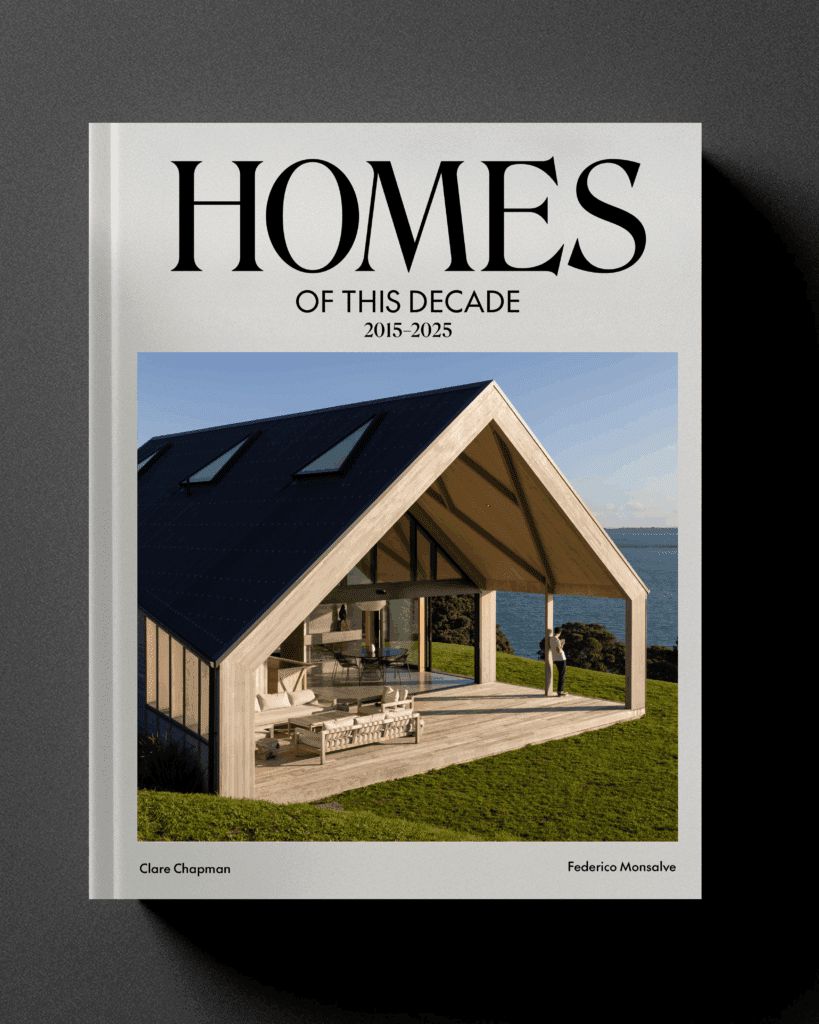
At the pool: Weighing in at over 2kg, it might be too hefty to tote to the beach, but here’s a poolside read that we can’t wait to get into properly. Grab your sunhat and your spritzer and settle in with Homes of this Decade 2015-2025, a special project by HOME NZ magazine. More than just eye-candy, the houses within are an ode to context. As Federico Monsalvo writes in his postscript to the book, “They are assemblages of materials that either reflect the surrounding whenua or offer an interpretation of the vernacular. Some are inspired by sand, others by river stones; by volcanic magma, by evocative patterns that suggest the melting of fallen snow…” Ten years of inspired New Zealand (and Pacific) architecture is contained in the pages, so for those with an architectural interest in what has been and, perhaps, what’s next, this is a natural for under the tree. Plus, there’s a special showcase of Richard Naish and Andrea Hotere’s E-Type house, awarded the accolade as the Home of the Decade - a seemingly simple project that accommodates a kaleidoscopic number of experiences (see more here https://rtastudio.co.nz/portfolio/e-type-house).
In the country: Rudimentary shelter. Indelible experience. That dichotomy is what makes Aotearoa’s backcountry and tramper’s hut system such a national treasure. For many RTA Studio team members, these little beauties are inextricably linked to summer getaways. This year, it’s no different. While architectural graduate Eva Jenkin is looking forward to hiking the Kauaeranga Kauri trail (Pinnacles walk) and spending time in the largest DOC hut in the country (80 bunks!), co-founder Richard Naish will be playing pioneer by pedal power, mountain biking in the Pisa Range. This challenging 70km journey through classic Central Otago country is a trip he has made with mates a couple of times already. It runs the length of the range, joining tracks together through a stark, wild landscape that initially climbs up through farmland, then continues past skeletal trees and the ghoulish forms of column tors up to the rocky heights at 2000 metres. The views of Lake McKay are just reward. An overnight stop at Meg Hut, which has its roots in the 1860s gold rush, means the chance to swim in the nearby stream, in water so cold it bites back – but keeps the beersies nice and chill. “This DOC hut, with its open fire and tin roof, represents an amazing piece of New Zealand’s rural history,” says Rich. Just picture it…Lamb stew under the stars, where once shepherds overwintered their stock in a basin sheltered from most of the snowfall. Magic.
To the coast: Stacey Farrell, who recently joined our Wānaka studio, will be heading to the tiny settlement of Omaui, on the rugged Southland coast. Her family holiday home, which she designed as a low-grounded form to segue with the landscape, is built of structurally insulated panels and wraps around a windswept beech. “The exterior has been designed for native plants to eventually climb over it, so it’s even further concealed,” says Stacey. Between walks through lowland coastal forest or along the estuary, she’ll be installing outdoor baths on the patio. Stacey designed the baths to double as loungers and benchseats; they operate as both vessels and platforms where she and those who visit can linger longer drinking in the natural panorama. Far in the distance are the Fiordland mountains, across the bay waves break onto Oreti beach (where The World’s Fastest Indian was filmed) and right in front of the patio, the birdlife is prolific. “There are tūī, pīwakawaka and kererū, and the kārearea that work the dunes for prey are beautiful to watch.”